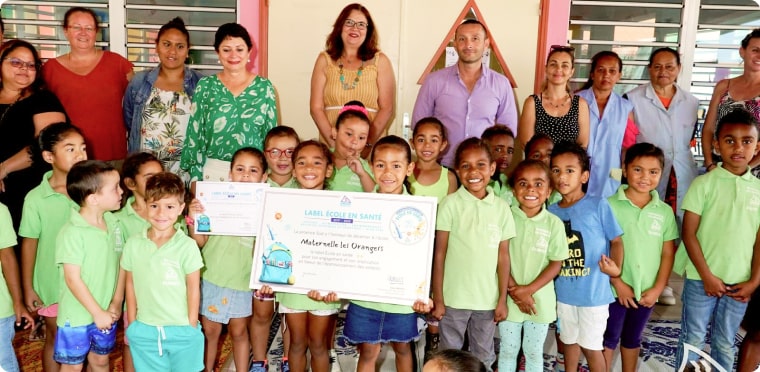

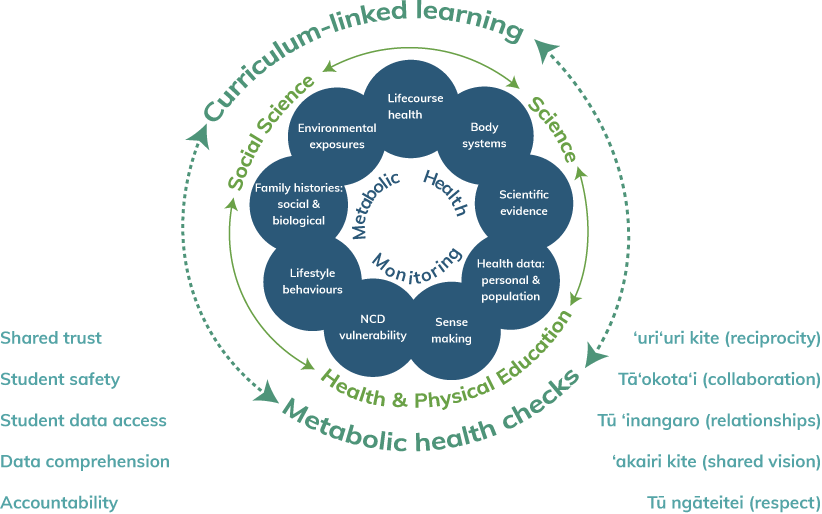
Metabolic health checks were introduced in Cook Islands schools within the context of a wider curriculum programme exploring non-communicable disease in individuals and the community.

Involving students in strategies to improve metabolic health
- Adolescence is a key stage for intervention, and involving the students and their families in strategies to improve both metabolic health, scientific and health literacy is critical for long-lasting positive change.
- Students wanted to learn about their own health using their own measurements and the programme was developed in a way that supports their understanding.
Project timeline
 |
|
 |
|
 |
|
 |
|
 |
|
 |
During COVID-19:
|
 |
|
 |
|
 |
Impact highlights
Empowering students and their families to reimagine future health outcomes
- Students recorded their own metabolic health measurements in a personal My Health Profile booklet, alongside explanations of each indicator and its interpretation.
Students… can use their data in decision-making around lifestyle choices. Learning gives them knowledge of the [related] science and social science. The testing and learning give the students a sense of ownership of their health and an understanding of the why. Many have shared in class that they have shared knowledge with their families, particularly those who have NCDs as they are concerned about them.
- There is an obvious increase in students wanting to learn more about and manage their own health and wellbeing and the health checks provide a great starting point for this.
They’ve been conscious now of what they bring to school or what they eat… They eat together, they talk about it, and they will say, “Oh, no, you need to eat less of that, you know, one fruit is not enough, you know, you’re supposed to drink plenty of water”, like, they talk about it amongst themselves. So, yes, they encourage each other.
Developing statistical literacy skills for public health staff
- Professional development addressed capacity limitations around data collection, processing, and analysis. Standard operating procedures were introduced, enabling additional public health staff to train and upskill in data collection and preparation.
- Responsibility for data analysis was gradually passed from University of Auckland collaborators to TMO Public Health staff via professional development and mentoring.
The programme has enhanced our capacity to analyse and present the health check data. Access to tools and training… has supported my team to move from learning and co-analysis to being able to take over the analysis, with the confidence that our team can do this internally.
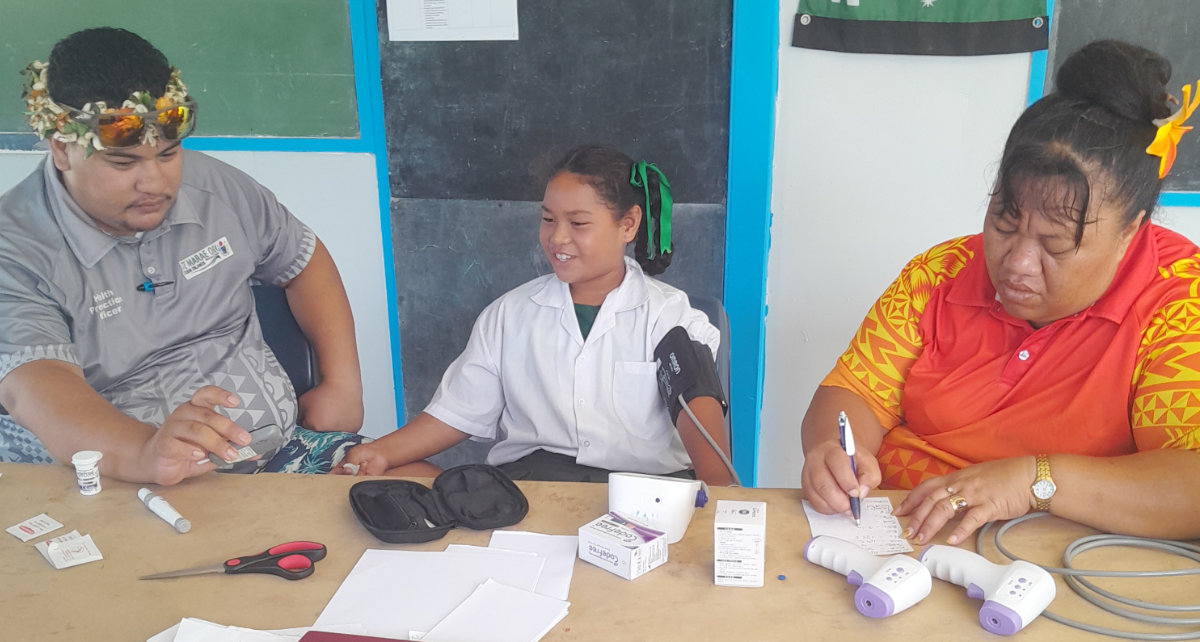
Improving understanding of adolescent metabolic risk
- The high prevalence of metabolic syndrome in the adult population highlights the importance of understanding adolescent health trajectories and risk factors, and tailoring future investment for greatest health impact.
- Initial measurements establish a baseline from which population health can be monitored over time.
- Combined data from all four schools provides a sample of sufficient size for statistical analysis.
The health checks offered the Ministry [of Education] actionable data to understand the health status of our learners. It has enhanced schools’ capacity to integrate health literacy across the curriculum.

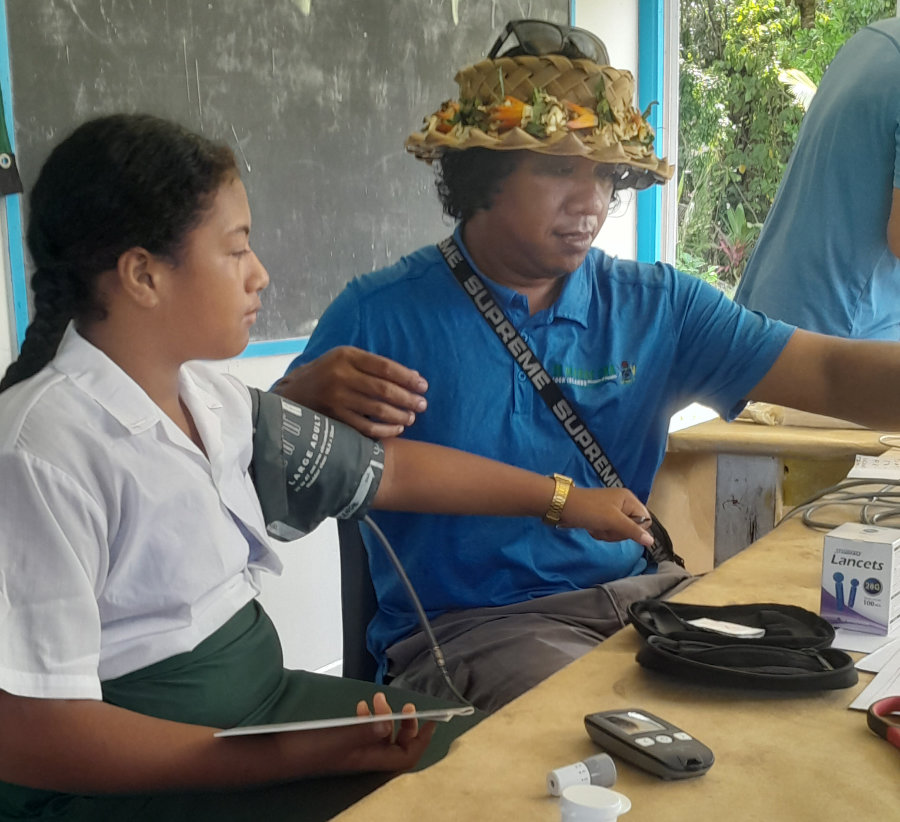
Metabolic indicators measured
- Height
- Weight
- Waist circumference
- Blood pressure
- Blood glucose
- Total cholesterol
All four high schools in Rarotonga participated between 2016-2023, with 783 students measured during their Y9 school year
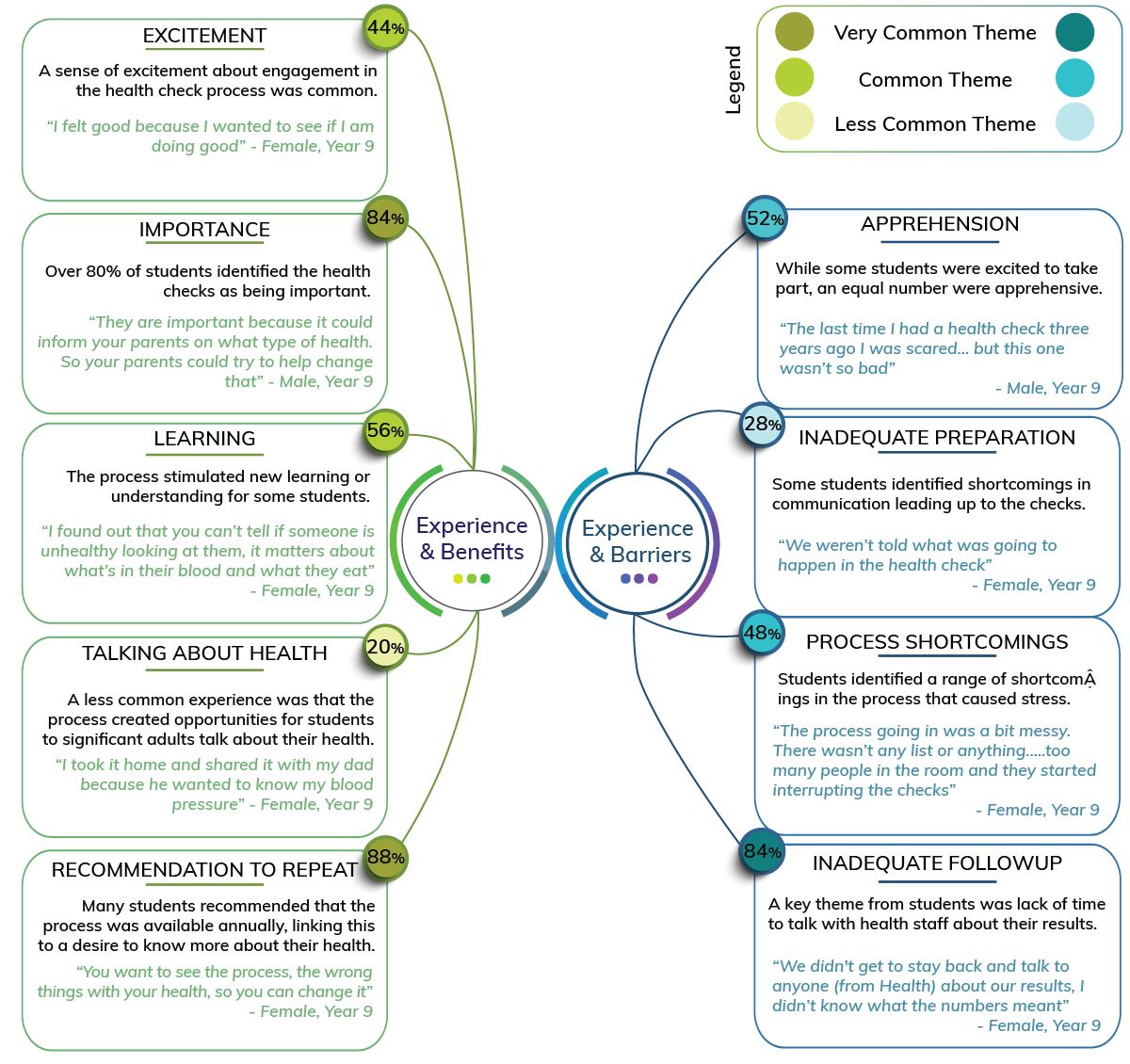
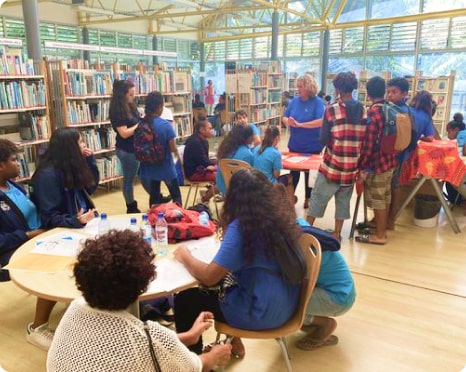
In 2016, feedback from 50 students (above) helped the team to improve the testing process.
Each year, teachers and health staff review the process and consider feedback from students.
Future vision
Working collaboratively with Ministry of Education and the schools strengthens the capacity to deliver health services in the schools. Data gained from the metabolic health check will guide evidence based policymaking and future education initiatives.
- Bay, J., Yaqona, D., & Oyamada, M. (2019). DOHaD interventions: Opportunities during adolescence and the periconceptional period. In F. Sata, H. Fukuoka, & M. Hanson (Eds.), Pre-emptive Medicine: Public Health Aspects of Developmental Origins of Health and Disease (pp. 37-51). Springer Singapore. https://doi.org/10.1007/978-981-13-2194-8_3
- Bay, J., John, T., Barrett-Watson, C., Ngamata, K., Renelle, A., Trask, S., Bates, M., Vickers, M., & Cochrane, D. (2025). Evolution of a sustained health promotion programme exploring adolescent metabolic health in the Cook Islands. Health Promotion International. https://doi.org/10.1093/heapro/daaf069
- Bay, J., Barrett-Watson, C., & Trask, S. (2025). Tōku Ora’anga Kōpapa, Nō te au rā ki mua | My Health My Future. Read Pacific Publishers Ltd., Auckland, New Zealand. ISBN: 9781991154972.
- Bay, J., John, T., Renelle, A., Ngamata, K., Barrett-Watson, C., Trask, S., Vickers, M., Cochrane, D. T. & Bates, M., (In review). Monitoring metabolic health in the adolescent population of Rarotonga: A multi-year cross-sectional study from 2016 to 2023.